The product idea
A business app that brings digital warranty issuance, product and customer records, claims, maintenance, and store-team access into one mobile workflow.

Case Study
Arabic-first business app · Warranty and service operations · Flutter
An Arabic-first operations product that helps stores issue digital warranties and manage claims, maintenance, and team access in one clear mobile workflow.
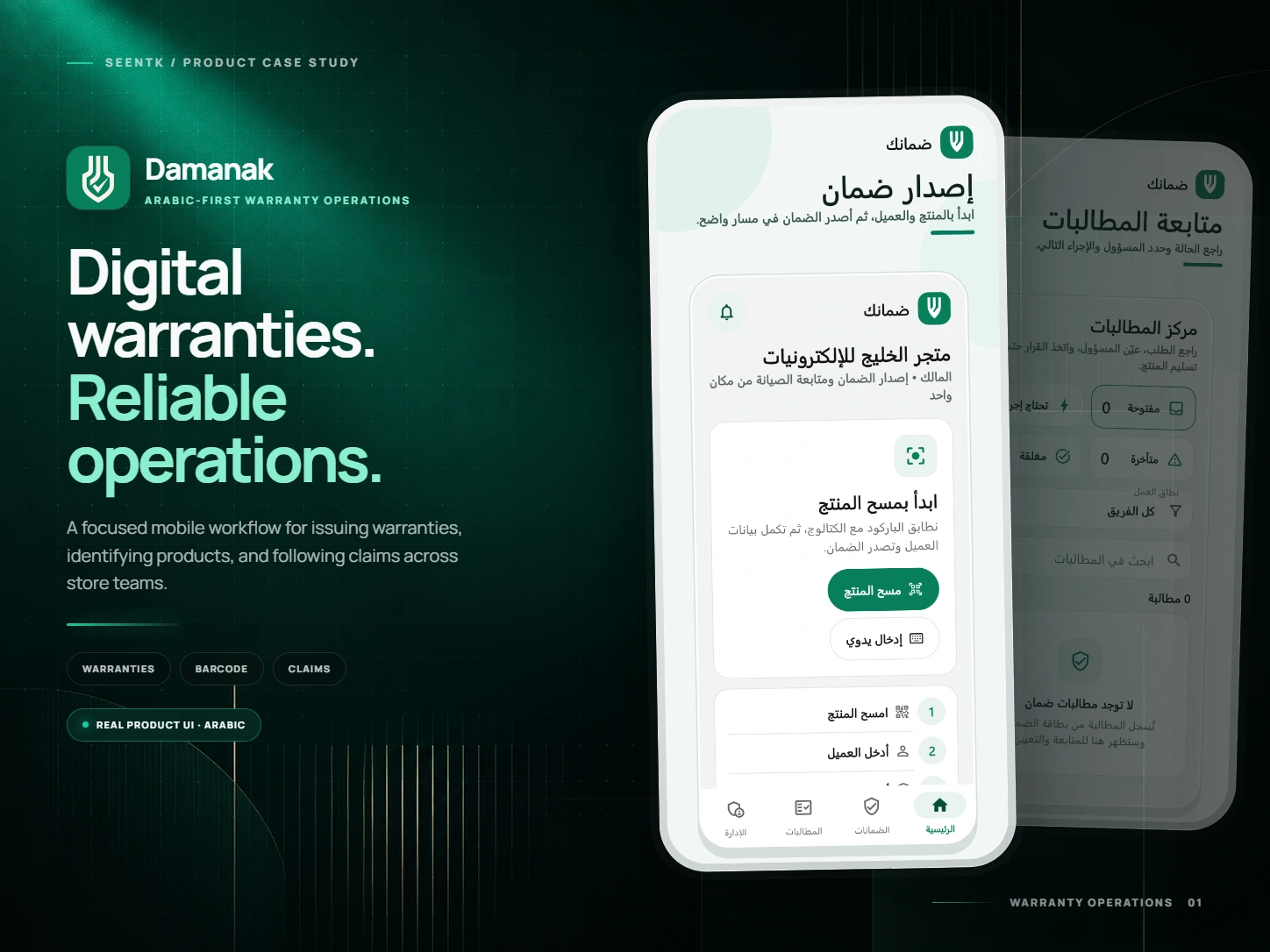
A business app that brings digital warranty issuance, product and customer records, claims, maintenance, and store-team access into one mobile workflow.
Warranty information is often split across paper receipts, spreadsheets, and messages. That makes it difficult to find a serial number, understand a claim status, or know who owns the next step.
Store owners, managers, and employees who need a clear Arabic workflow for issuing warranties and managing after-sales service.
Turn the warranty from a document that is easy to lose into an organized digital record, while keeping issuance, claims, maintenance, and team permissions understandable on mobile.
An employee scans a product barcode or enters it manually, adds the serial number, customer details, and warranty period, then issues a shareable warranty card. When a claim is raised, the team opens it from the warranty record and follows its status, owner, and next action.
We analyzed the store workflow, designed and developed the cross-platform Arabic product, built authentication, synchronization, and permission services, integrated scanning, sharing, and subscriptions, and prepared testing and store releases.
We built an Arabic-first Flutter app that connects products, serial numbers, customers, warranties, and claims. It supports branches, team roles, search, product imports, operational reporting, cloud synchronization, and in-app subscriptions.
The product had to combine a fast employee workflow with role-based access and isolated store data, server-side subscription verification, camera and barcode integrations, sharing links, and a clear Arabic experience on iOS and Android.
The app uses Flutter and Dart with Supabase for authentication, PostgreSQL data, and server-side functions. Row-level access policies isolate each store. Native integrations handle scanning, sharing, sign-in, and server-verified App Store and Google Play purchases.
Issue digital warranties from a mobile device, Scan or manually enter barcodes and serial numbers, Shareable and verifiable warranty cards, Claims and maintenance tracking, Branch, role, and team-permission management, Search and product-list imports, Operational reports and CSV export, Google and Apple sign-in, In-app subscriptions and purchase restoration
Arabic-first RTL product experience, Cross-platform Flutter application, Digital warranty issuance, Barcodes and serial numbers, Claims and maintenance operations, Branches and team permissions, Authentication and cloud synchronization, In-app subscriptions, Testing and store preparation
Published on the App Store; Android was not publicly available at the latest verification
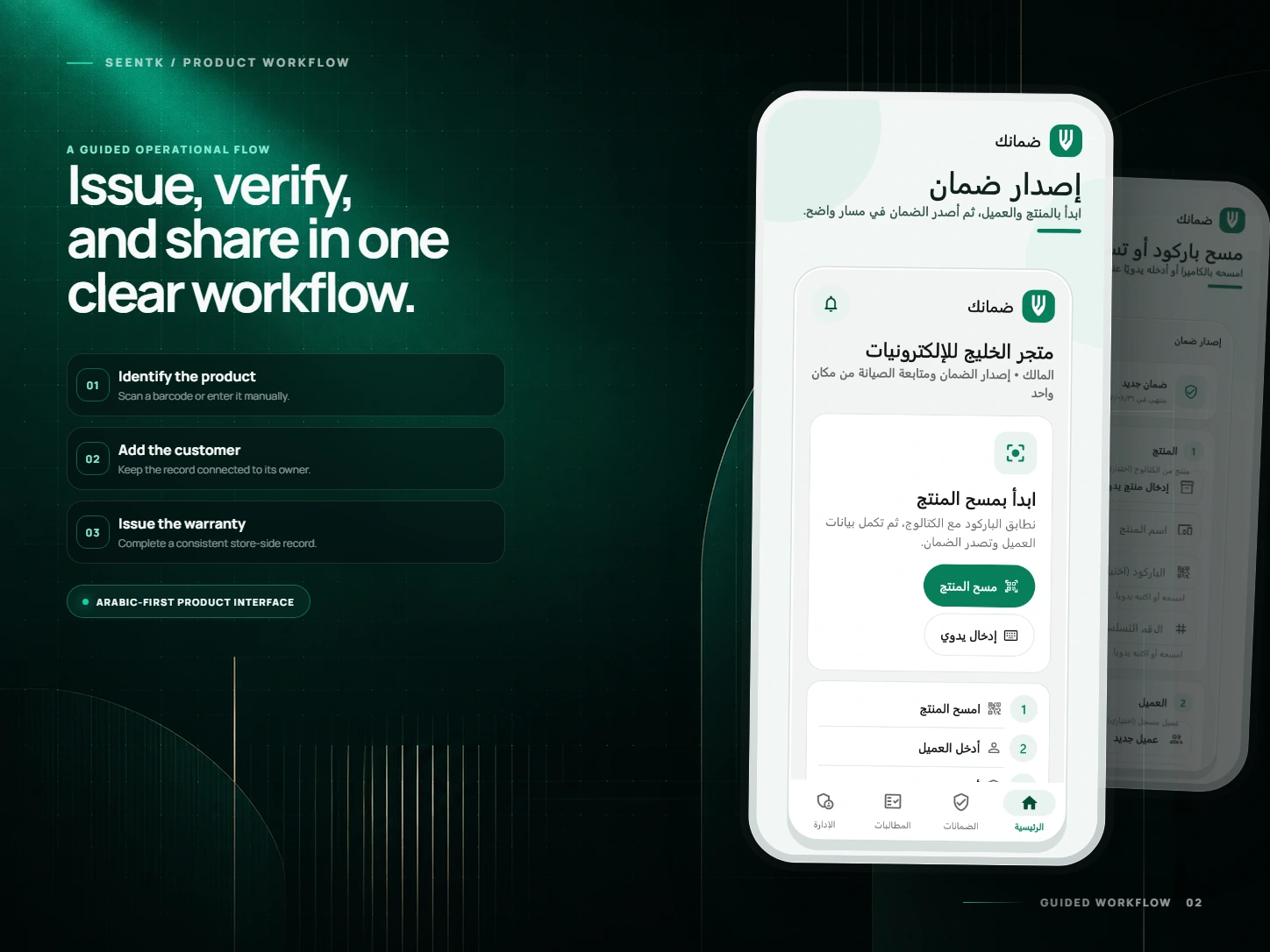
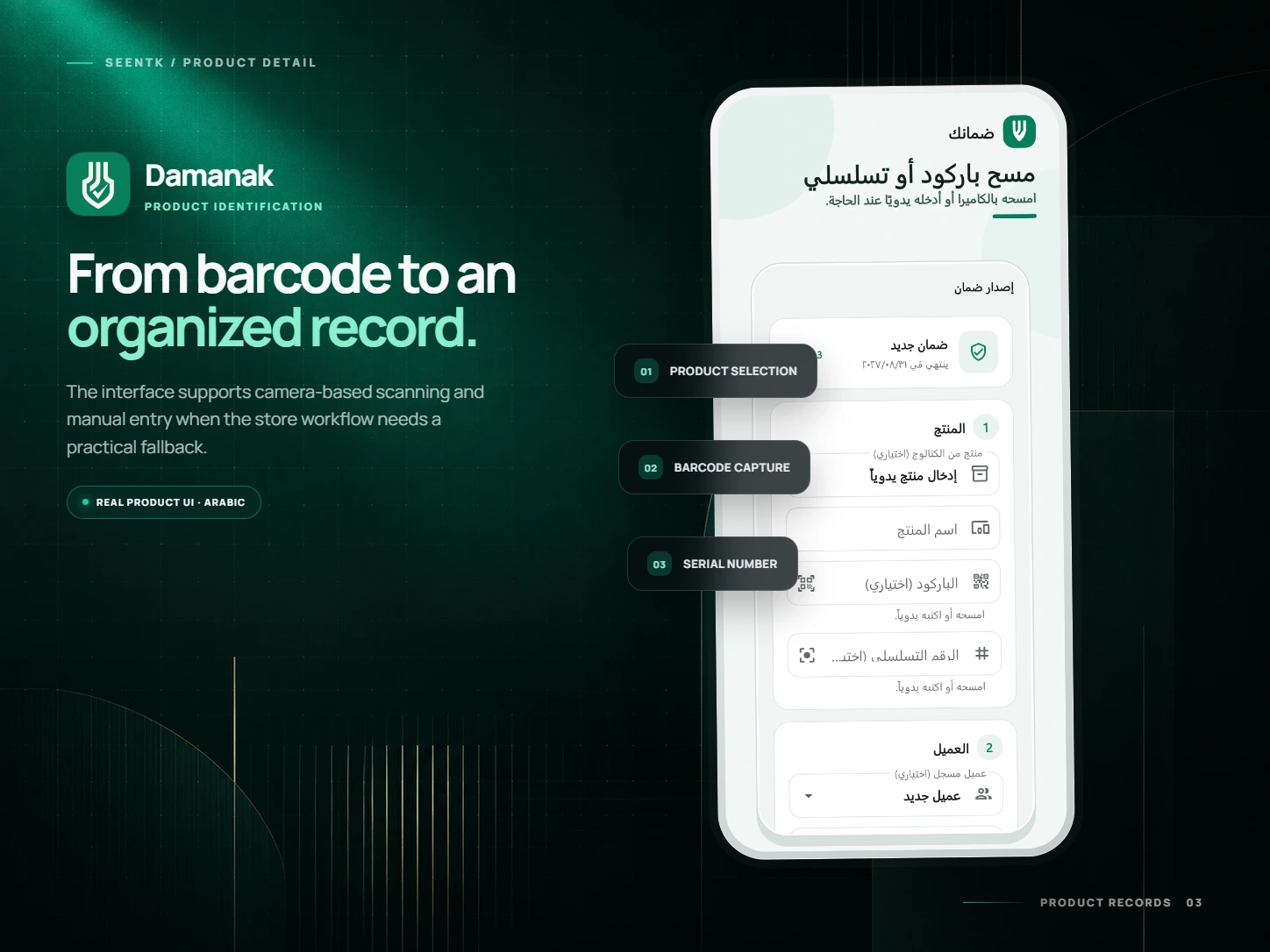
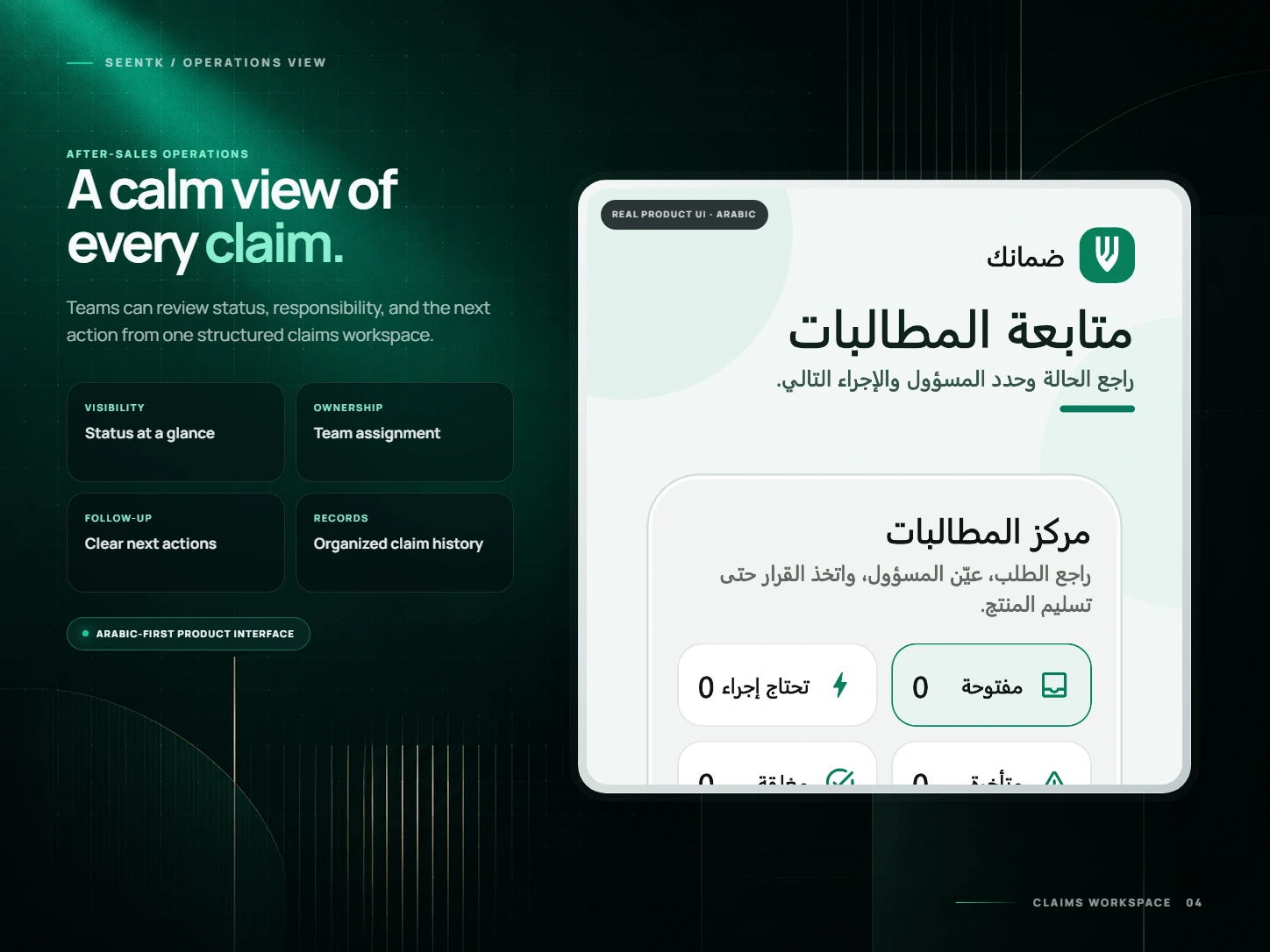
Open the public product page to inspect the current description and available store imagery.
In store-operations products, value comes from connecting the product, customer, warranty, claim, and team in one record with one clear next action—not from adding more screens.
The public App Store page lets prospective clients inspect the published product, its current description, and store imagery. The Android version was still in testing at the latest verification and was not publicly available.
Published on the App Store; Android was not publicly available at the latest verification. The public App Store listing documents a real published product. This case study shows SeenTK’s ability to build an Arabic-first business app with backend services, permissions, native integrations, and subscriptions.
Share the idea and we will help turn it into a clear scope and a practical first step.
View on the App Store Discuss your project